
17 February 2026
Lesotho: Trained laypeople improve blood pressure care with the help of a tablet app
In many rural regions of Africa, high blood pressure often goes untreated. A new study now shows that trained lay people from the village community can provide effective and safe care for people with high blood pressure - supported by a digital decision-making app. The results were published in Nature Medicine.
Lay care outperforms standard treatment
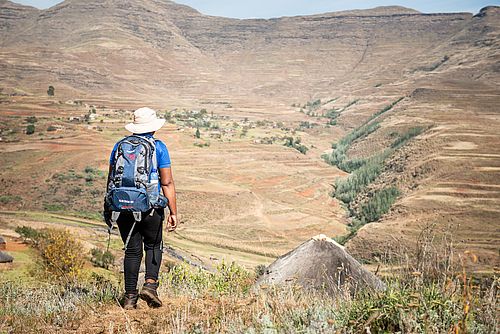
In the study by first author Dr. Felix Gerber, led by DKF Co-Leader and research group leader Prof. Dr. Niklaus Labhardt (Clinical Epidemiology, DKF), together with the Swiss NGOSolidarmed, 103 lay caregivers tested more than 6,600 people in their villages for hypertension as part of the ComBaCaL research program. Diagnosed patients were cared for directly on site according to clear treatment protocols. The study results show:
- Better blood pressure control in the lay-supported model compared to usual care in health facilities.
- No differences in serious side effects - treatment by trained lay people is just as safe.
- Care is brought closer to the people and relieves the burden on healthcare facilities.
This means that with brief training and digital support, lay people in remote areas can make a decisive contribution to care.
Significance beyond Lesotho
The study provides important evidence for the so-called "task shifting" approach in regions with a shortage of specialists. Next, the research team will investigate the cost-effectiveness of the model.
Project Lead
Prof. Dr. med. Niklaus Labhardt and Dr. med. Alain Amstutz, Clinical Epidemiology, Department of Clinical Research, University of Basel and University Hospital Basel
Study design
Cluster-randomized controlled study
Study location
103 rural villages in Lesotho
Participants
547 adults with hypertension
Original publication
Lay community health worker-led care with mobile decision support for uncontrolled hypertension: a cluster-randomized trial. Gerber et al, Nat Med. 2026 Feb 12. doi: 10.1038/s41591-026-04208-w.
Further information
Full press release on the website of the University of Basel