
16 September 2026
Prostate Cancer: Radioligand Therapy Active and Well Tolerated in Routine Clinical Practice
A prospective registry study recently published in “Lancet Medical Imaging & Theranostics” shows that treatment with [¹⁷⁷Lu]Lu-PSMA-I&T has clinically meaningful activity and is well tolerated in patients with metastatic castration-resistant prostate cancer. The active ingredient can be produced in hospital-based radiopharmacies and is therefore available even in settings where commercial preparations are not readily accessible.
In advanced, metastatic prostate cancer, treatment options are limited once hormone therapy and chemotherapy have been exhausted. PSMA (prostate-specificmembrane antigen)-targeted radioligand therapy uses a carrier molecule that binds to the prostate-specific membrane antigen on tumor cells and, with the help of the radionuclide lutetium-177, delivers radiation specifically to the tumor. Randomized studies have demonstrated the benefit of the related agent [¹⁷⁷Lu]Lu-PSMA-617. For [¹⁷⁷Lu]Lu-PSMA-I&T, which is widely used in Switzerland, prospective data from multiple centers have been lacking until now.
333 patients at seven Swiss centers
The Swiss PSMA Registry was established by the Swiss Society of Nuclear Medicine. It was initiated and led by an interdisciplinary team from the University Hospital Basel and the University of Basel comprising specialists from various subject areas (nuclear medicine, radiopharmaceutical chemistry, oncology, urology, and DKF) – including DKF research group leaders Prof. Damian Wild (Nuclear Medicine) and Prof. Cyrill Rentsch (Urology).
The study enrolled patients who had undergone intensive prior treatment between May 2020 and June 2024 as part of routine clinical care. Of these, 333 received at least one cycle of therapy and were included in the analysis.
In two-thirds of the patients, the tumor marker decreased, with side effects mostly mild
198 patients (64%) showed a response in the form of a reduction in PSA (tumor marker) levels, and 137 patients (45%) even experienced a 50% reduction in PSA. Changes in blood counts occurred frequently but were predominantly mild. Severe side effects occurred primarily as anemia (9%) and clinically insignificant lymphopenia (21%). No life-threatening or fatal side effects were observed, nor were there any cases of severe renal toxicity. In 5% of patients, treatment-related side effects led to discontinuation of therapy.

“Our large, multicenter study conducted in Switzerland shows that radioligand therapy with [177Lu]Lu-PSMA-I&T can also be used safely and effectively in patients with castration-resistant, metastatic, treatment-resistant prostate cancer.”
Prof. Damian Wild, Head of Nuclear Medicine, University Hospital Basel, and DKF Research Group Leader
In-Hospital Production Expands Access
The substance produced by the department of radiopharmaceutical chemistry (Clinic for Radiology and Nuclear [¹⁷⁷Lu]Lu-PSMA-I&T has been confirmed as an effective and well-tolerated treatment for metastatic castration-resistant prostate cancer.
[¹⁷⁷Lu]Lu-PSMA-I&T can be produced directly in nuclear medicine centers as a non-commercial radiopharmaceutical in accordance with GMP standards. Where access to commercially manufactured radioligand therapies is limited by availability, expenses, or logistics, this can improve patient care.
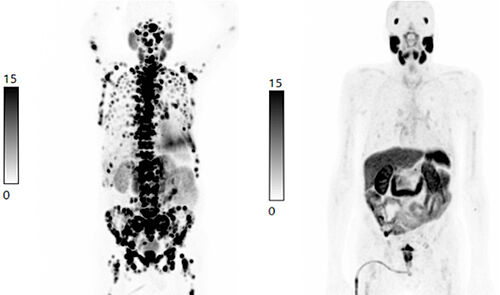
Universitätsspital Basel, Klinik für Radiologie und Nuklearmedizin
Swiss PSMA Registry
PSMA-Targeted Radioligand Therapy with [¹⁷⁷Lu]Lu-PSMA-I&T in Metastatic Castration-Resistant Prostate Cancer
Director
Prof. Damian Wild, Head of Nuclear Medicine
PD Dr. Guillaume P. Nicolas, Nuclear Medicine
Dr. Alin Chirindel, Nuclear Medicine
Dr. Andreas Bauman, Head of Radiopharmaceutical Chemistry
Prof. Frank Stenner, Oncology
Prof. Arnoud J. Templeton, Oncology
Prof. Cyrill A. Rentsch, Urology
(all from University Hospital Basel)
Study Design
Prospective, multicenter, single-arm registry study
Study Centers
Seven centers in Switzerland (Basel, Bern, Lausanne, Lucerne, St. Gallen, Zurich, Aarau)
Number of study participants
333 patients
Project duration
May 2020 – March 2025
Supported by the DKF through
Data Analysis/Statistics, Data Management
Funding
Swiss Hadron Foundation