
8 June 2026
New SNSF project funding for DKF research groups
A total of four projects sumbitted by DKF research groups were awarded in the latest round of SNSF project funding. The award-winning projects address specific patient-relevant research questions and create new foundations for personalised treatments. The grants are substantial and will enable the researchers to create evidence-based results for the benefit of patients.

©DKF
Research Group Andreas Albert Müller
Digital twins for the treatment of children with cleft lip and palate
This project investigates new digital approaches to optimise treatment planning and follow-up of children with cleft lip and palate. It addresses a relevant gap in existing medical models. Many of these models are based on data from healthy adults and do not adequately reflect the specific anatomical and developmental characteristics of children.
The research team is using artificial intelligence and routine clinical data to create patient-specific "digital twins". These virtual 3D models are intended to visualise facial dynamics and growth over time and thus support diagnosis, surgical planning and follow-up. The aim of the project is to reduce stressful examinations, improve clinical decision-making and enable more personalised care for children with craniofacial malformations.
AI-Driven Modeling, Rendering, and Clinical Evaluation of Pediatric Craniofacial Pathology and Development
SNSF project 10008799
Project lead
Barbara Solenthaler, Department of Computer Science ETH Zurich, Switzerland
Andreas Albert Müller, University Hospital Basel Maxillofacial Surgery, Switzerland
Benito Benitez, Oral and Maxillofacial Surgery Facial & Cranial Anomalies Research Group University Hospital Basel, Switzerland
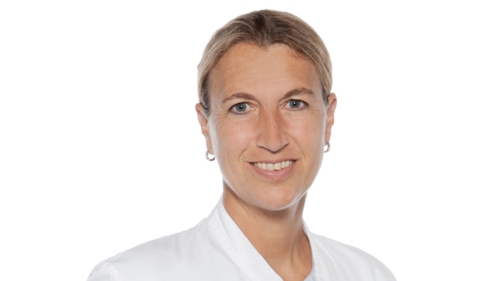
©Universitätsspital Basel
Better prognosis for surgery for lumbar spinal stenosis
Symptomatic lumbar spinal stenosis is the most common cause of spinal surgery in people over the age of 65. Although surgical interventions are intended to reduce pain and functional limitations, the medium- and long-term results have so far only been predictable to a limited extent.
This project aims to develop a prognostic model that adds functional and biomechanical factors to demographic, clinical and radiological parameters and uses digital simulation models to combine movement and muscle forces with detailed load analyses of individual spinal segments. This should facilitate better understanding of mechanisms of inadequate recovery or factors that can lead to reoperation. The ultimate goal is to individualise treatment decisions to a greater extent in future.
RoLSSroice II: Predicting mid-term postoperative function, patient-reported outcomes, and spinal loads in lumbar spinal stenosis: a translational approach integrating clinical, radiological, biomechanical, and multi-scale in silico modeling
SNSF project 10009323
Project lead
PI Cordula Netzer, Head of Spinal Surgery, Head of Spine Center, University Hospital Basel
Co-PI Stephen Ferguson, Institute of Biomechanics, ETH Zurich

©Universitätsspital Basel
Gentler treatment for breast cancer with lymph node involvement
Axillary lymph node dissection is still the standard treatment for breast cancer with lymph node involvement. However, the procedure is often associated with pain, lymphoedema, restricted shoulder mobility and morbidity. As a less radical approach, the NOAX study is investigating focused axillary surgery, in which only palpable and sentinel lymph nodes are selectively removed and the armpit is then treated with targeted radiotherapy.
This is an international, multicentre, randomized controlled phase III study examining whether this approach improves the quality of life of patients and reduces the incidence of lymphoedema compared to standard treatment.
OPBC-10/NOAXAxillary radiotherapy or axillary lymph node dissection in patients with clinically node-positive breast cancer undergoing upfront tailored axillary surgery: An international, randomized superiority trial
SNSF project 10007682
Project leader
Walter Paul Weber, Co-Head of the Breast Clinic, Chief Physician Breast Surgery, Deputy Medical Director, Medical Head of Department, Department of Breast, Abdomen and Pelvis

©Universitätsspital Basel
Optimization of radioligand therapy for neuroendocrine neoplasia
Neuroendocrine neoplasms are a heterogeneous group of tumors whose incidence is increasing. An important therapeutic approach for the treatment of inoperable, metastatic neuroendocrine tumors is peptide receptor radioligand therapy, in which radiolabeled agents are delivered as directly as possible to the tumor cells by binding to peptide receptors on the cell surface.
This project aims to determine the maximum tolerated dose of a new peptide receptor radioligand therapy (terbium-161-labeled somatostatin receptor antagonist DOTA-LM3) and then determine its efficacy in terms of progression-free survival and disease control. This new approach will be used in patients with metastatic neuroendocrine tumors whose disease has progressed again after standard therapy.
Rechallenge Conversion/Auger-Electron plus Beta-minus Particle Therapy with Terbium-161 labeled Somatostatin Receptor Antagonist DOTA-LM3 in Neuroendocrine Tumors - Convalescence Phase I/II Study
SNSF project 10008316
Project leader
Damian Wild, Head of Nuclear Medicine, Radiology and Nuclear Medicine, University Hospital Basel