
6 July 2026
SNSF IICT call 2026: two studies from Basel receive funding
The DKF research groups led by Eleonora Seelig and Marios-Nikos Psychogios have each been awarded an Investigator Initiated Clinical Trial Grant (IICT) from the Swiss National Science Foundation. In total, five studies received funding through this call. The two projects demonstrate the breadth of clinical research at the Basel site – from the prevention of serious side effects of established therapies to the further development of acute stroke treatment.
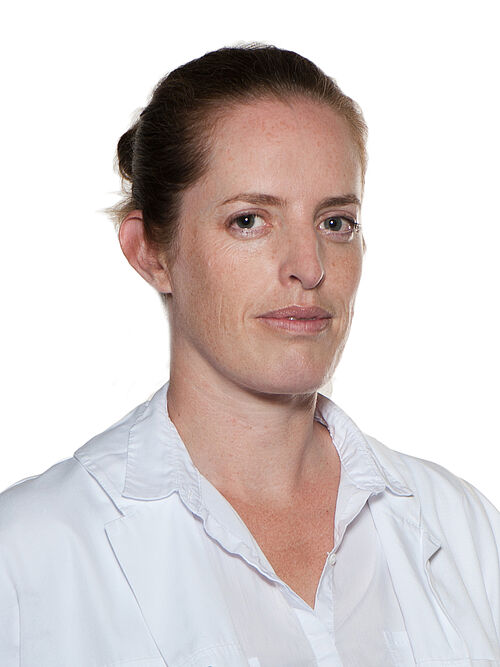
Project Leader PD Dr med Eleonora Seelig, research group leader at the Department of Clinical Research and physician at the Department of Endocrinology, Diabetology and Metabolism, University Hospital Basel
Metformin Study
Metformin to Prevent Glucocorticoid-Induced Toxicity – A Randomized, Controlled Phase 3 Trial
Lead
PD Dr med Eleonora Seelig, Prof Dr med Philipp Schütz
Study design
Randomised, double-blind, placebo-controlled, multicentre phase III trial
Study aim
Glucocorticoids are used to treat many inflammatory and autoimmune diseases. They are effective, but long-term use can cause serious side effects. One particularly relevant complication is glucocorticoid-induced diabetes, which is associated with an increased risk of infections, cardiovascular disease, hospitalisation and increased mortality.
The study investigates whether metformin can prevent the development of treatment-relevant diabetes in patients receiving long-term glucocorticoid therapy. It will also assess effects on muscle and bone health, body weight, glucose and lipid metabolism, blood pressure, quality of life, adverse events and health economic outcomes.
Study population
525 adult patients who require systemic glucocorticoid therapy for at least three months.
Project duration
5 years
Supported by the DKF through
Methodology & Study Design, Data Analysis/Statistics and Patient & Public Involvement.
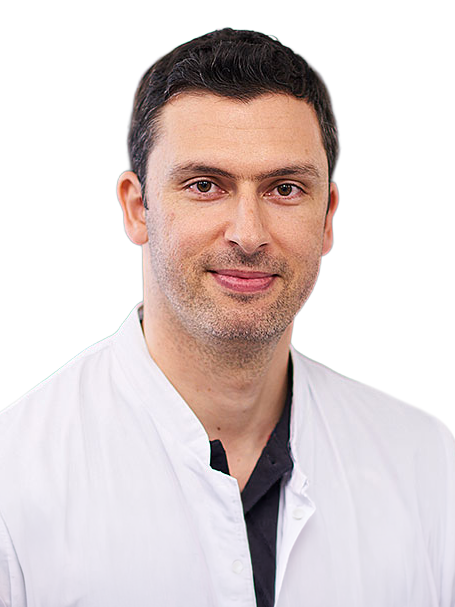
Project Leader Prof Dr med Marios-Nikos Psychogios, research group leader at the Department of Clinical Research and Head of Neuroradiology, University Hospital Basel
MANAGE-DISTAL Study
Thrombectomy, intra-arterial thrombolysis, or best medical therapy for the treatment of stroke caused by medium- or distal-vessel occlusion – An adaptive randomized controlled trial
Lead
Prof. Marios-Nikos Psychogios, Prof Dr med Urs Fischer, PD Dr med Victoria Hellstern, Prof Dr med Johannes Kaesmacher, Prof Dr med Paolo Machi
Study design
Multicentre, adaptive, randomised controlled trial with blinded endpoint assessment
Study aim
In ischaemic stroke caused by medium or distal vessel occlusions, the optimal acute treatment remains unclear. While mechanical thrombectomy is established for large vessel occlusions, there is still considerable uncertainty regarding medium and distal vessel occlusions.
MANAGE-DISTAL compares three treatment strategies: usual standard care, mechanical thrombectomy and intra-arterial thrombolysis. The aim is not only to compare the efficacy of these strategies, but also to determine which patients benefit most from which treatment. To this end, the study uses an adaptive design that takes into account patient- and disease-specific characteristics such as stroke severity, imaging findings and previous intravenous thrombolysis.
Study population
1,200 adult patients with acute ischaemic stroke caused by a symptomatic medium or distal vessel occlusion. The study will be conducted at around 50 centres in eight European countries.
Project duration
5 years
Supported by the DKF through
Methodology & Study Design, Data Analysis/Statistics, Regulatory Affairs, Data Management and Patient & Public Involvement.